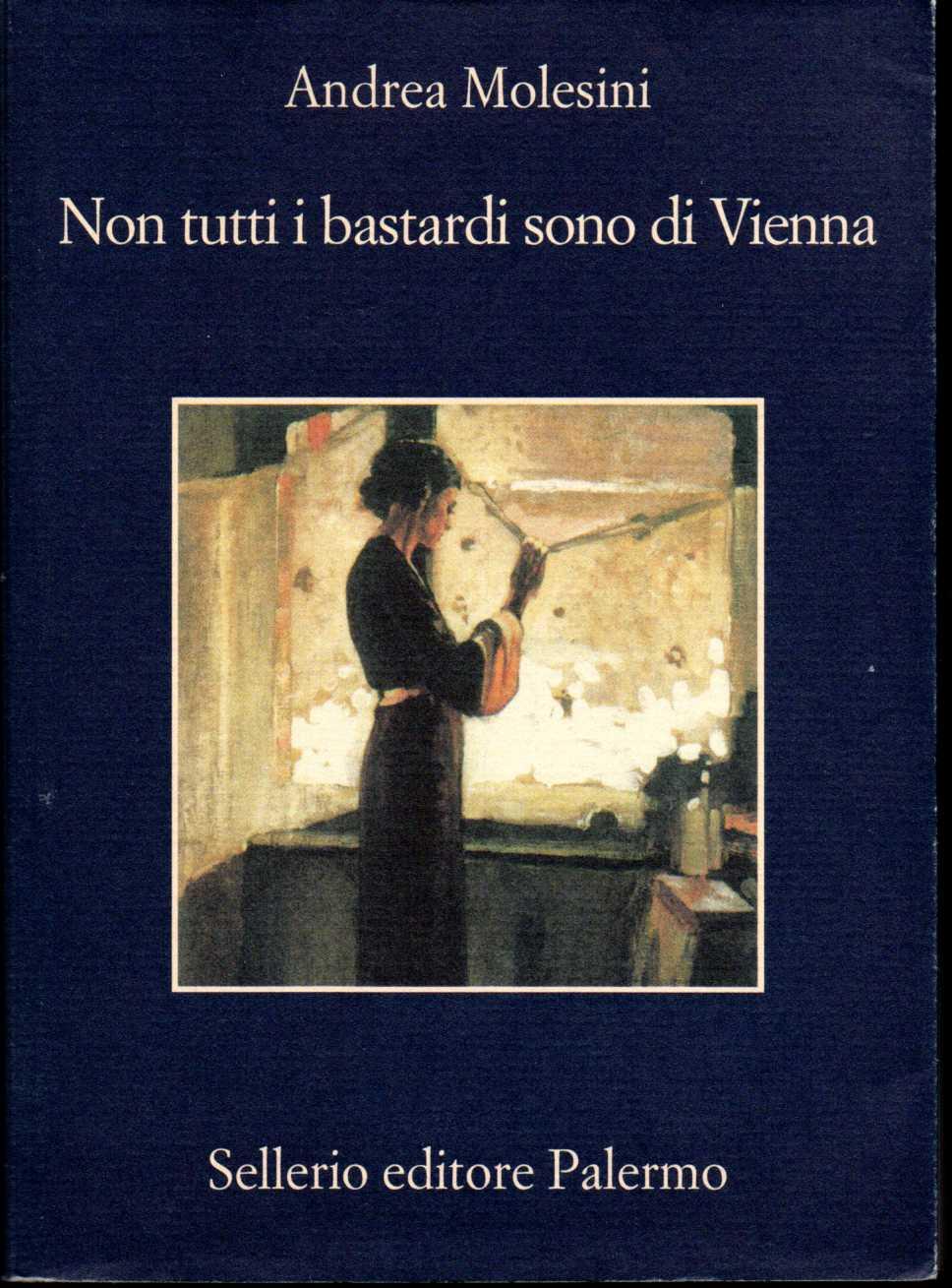
Not all bastards are from Vienna
Andrea Molesini
Non tutti i bastardi sono di Vienna
Sellerio
Synopsis
Pride, patriotism, hate, love: pure and ancient passions mingle and clash, clouded rather than restrained by the equally ancient sense of reticence and honor. Villa Spada, a stately home in a small village a few kilometers from the Piave River, takes place between November 9, 1917, and October 30, 1918: we are in the geographical area and time frame of the defeat of Caporetto and the Austrian conquest. The villa is home to the nobles: grandfather Guglielmo Spada, an original, and grandmother Nancy, cultured and bold; aunt Maria, who controls the household; young Paolo, a seventeen-year-old orphan, in the prime of his youth; young Giulia, buxom and a little crazy, with her flaming hair. And the servants are busy with chores: cook Teresa, tough as boxwood and a seasoned wit; his foolish daughter Loretta; and the gigantic caretaker Renato, a recent arrival at the villa. The story, told by young Paolo, begins with the enemy military command taking up residence in the large house. A crude episode of violence against peasant girls and mockery of the village priest ignites a desire for revenge. A conflict in which everything is lost, a patriotic conspiracy insinuating a clash of psyches, made worthy or miserable by the inability to forgive, and to separate love from hate, respect from victory.
Reviews
Noemi Ramello
Bobbio-Carignano high school,
We are in the period of the First World War, and the novel's protagonists are the Spada family. They are
a wealthy family forced to face the cruelty of the Germans who occupy their
estates. The entire story is narrated by Paolo, a seventeen-year-old orphan who shares his days with
other wise yet bizarre characters. The story, which spans a period from
November 9, 1917, to October 30, 1918, begins with the Spada family moving into the large house of the
enemy military command, and an episode of violence kicks off the narrative.
What stands out most from this novel, in my opinion, is the author's ability to
engage the reader. The most appreciable aspect was the author's choice to have the story narrated by
a teenager: in fact, I believe that through the innocent and inexperienced eyes of young Paolo, the reader
is able to identify the characteristics and, above all, the feelings of the various characters, which are never
explicitly presented. Sometimes it's important to approach the most challenging topics through the
eyes of a simple and introverted character, because it allows you to grasp the feelings that are often
hidden. A particularly striking character is Guglielmo Spada, Paolo's grandfather. I
liked how he reacted to his initial fear because, despite the situation surrounding him, he
managed to find great strength within himself. His relationship with his
wife, Nancy, is very unique and amusing: it's a classic husband-wife relationship, involving clashes and arguments over
trivial matters, but hiding a great love. This female character
plays a role that isn't always reserved for female characters. In fact, she herself took the
lead in defending her home from the German threat.
In conclusion, I feel free to recommend this book to anyone who sometimes struggles
to fully grasp the feelings of those around them.
Alice Spasaro
Carnot High School - Cannes,
Beneath this rather startling, even comical, title lies a drama, the story of an
Italian family during the Great War. In his primo romanzo, Andrea Molesini invites us to follow the
journey of the young orphan Paolo and his close relatives to Villa Spada, Spada after the surname
of his eccentric grandparents Guglielmo and Nancy. Villa Spada has become the theater of a private war.
Indeed, Paolo and his family are forced to host the enemy and must submit to him, prisoners within their
own walls.
The Spadas are an atypical family. At the beginning of the novel, the author leaves the reader in suspense. The
first chapter shows us the brutal arrival of German soldiers at the villa; we don't know the
characters; we observe the scene like unexpected guests. After a few words exchanged
between the characters, we understand who is who, and we get a first glimpse of the grumpy nature of the housekeeper
Teresa, the eccentricity of his grandfather, and the charisma of his aunt. However, the mystery surrounding the mysterious caretaker, Renato, remains unclear.
We don't even know what happened to the beautiful, young redhead Giulia, who
arrived at the Villa after fleeing Venice.
However, the character who remains most hidden is the narrator, the young Paolo: from one chapter to the next,
we get to know him, understand his sensitivity and his vision of war, witness the blossoming
of the love to which the beautiful Giulia initiates him, and his taste for danger when she leaves with Renato.
Molesini's characters reveal themselves with subtlety in this world of violence, because violence is present, but
the characters' inappropriate tone, this cynicism mixed with a certain fantasy, give the
novel a unique atmosphere.
Not All Bastards Are from Vienna is a war novel, a novel of initiation, a romance
that opens up to the reader like an old, broken window onto a bygone era.
Ariane Louis
Carnot High School - Cannes,
The Great War, with its immense violence, fascinated and traumatized people; but the
book "Not All Bastards Are from Vienna" isn't just another story about this momentous event:
Andrea Molesini has chosen to tell the story of the war, breaking away from the usual stereotypes of heroism and sacrifice. He
denounces the stupidity of a senseless war.
Towards the end of the First World War, the Spada family, who lived near the Piave River, found themselves
forced to host enemy officers. How do the
story's protagonists react? Between Paolo, an 18-year-old boy, an orphan who lives with his grandparents; Gustavo, who always has a
fake smile on his lips; Giulia, who is buxom; her grandfather, who only goes out when it rains; tensions
multiply…
Paolo narrates the events through his lively mouth… The character's point of view blends with
the narrator's: pride, patriotism, hatred, and love intertwine to create a
complex novel. The violence is crude (violence against peasant girls), but it is the violence of this period.
A dark time, especially for those experiencing the war: defeatism is present, the grandfather
exclaims: "The war is lost!"
When there's war, we can't always be ourselves, we have to play a role, and nothing is
simple: "Grandpa had a face that laughed even when he was sad." In this demolished world, full of
anger, we must be strong, and the characters are robust: "Giulia was chaos, a pressing force."
We cannot be weak in the face of the cruelty of the world, like for example that boy who tells
how his mother died and "There was no emotion in her voice." Death is part of this
world where we can no longer smile or cry: Maria, "We have neither tears nor smiles anymore,
we just want to rest."
partner




in collaboration with

with the support of