The Amalassunta
Pier Franco Brandimarte
L’Amalassunta
Joints
Synopsis
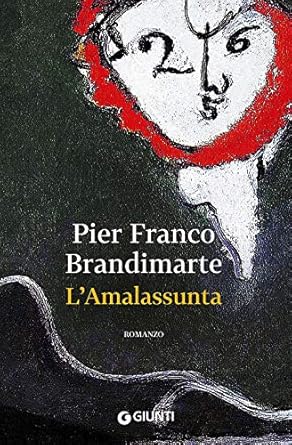
"There I see it," writes Brandimarte, and so begins the adventure of an impossible yet real dialogue between two existences distant in time yet giving each other meaning. Both obsessed with the naked truth, with the bare and essential story of themselves. Today as yesterday. Montevidone, a small town in the hills of the Marche. There the young narrator's grandfather owned a barber shop. And in that village, after his education in Bologna and Paris, the painter Osvaldo Licini lived and worked, between "the humble walls of the houses" until he "stretched out into the fields." There Licini searched for the moon, a silvery friend, while young Antonio today searches for meaning in his life by investigating that of the painter. Leaving Turin and his fiancée Nina to understand Licini—digging out his testimonies, forcing a logical and feral instinct to follow his trail everywhere—is for the narrator a personal "recherche." The "Flying Dutchmen," the "Trabocchi," the "Rebel Angels," and the "Amalassunte" are not only Licini's most emblematic works, they are the distillation of a life whose cornerstones remain the Bologna of the Academy, during the 1910s, together with Morandi and Vespignani; the Great War, which injured Licini in the leg; the Paris of a Modigliani near death; the belated recognition at the Venice Biennale in 1958; and the love for Nanny Hellstromm, his Swedish wife who remained by his side until the end.
partner




in collaboration with

with the support of