My place is here
Synopsis
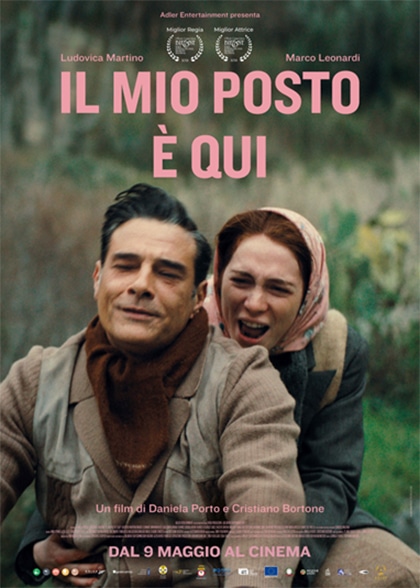
Calabria, 1940. Marta and Michele are in love. The night before he leaves for war, they make love. But Michele doesn't return from the front, and Marta, pregnant, gives birth to little Michelangelo. While a single mother might not have caused a scandal during the war, once peace returned, her situation in the village became uncomfortable. So her father, to save the family honor, promises her in marriage to Gino, a man she doesn't love, a widower with two children. During the preparations for the big day, Marta is forced to deal with Lorenzo, the parish priest's assistant, known in the village as "the wedding man" for his refined taste, which he puts at the service of young brides, but is frowned upon for his effeminate ways. Despite initial reluctance, a deep friendship soon develops between the two, and Marta discovers a world of marginalized and unconventional, yet authentic, people. Dreaming of a different future, where she can feel emancipated and in control of her femininity, is possible. And Lorenzo, who will help her secretly attend a typing class, is perhaps the only one who can understand her. In that remote corner of the world where patriarchal culture reigns supreme, the two will be forced to defend themselves against hypocrisy and prejudice at all costs.
Reviews
Anna Chiotti
De Amicis High School in Cuneo, class 4G
The book offers a glimpse into daily life in a small Calabrian town, where people live simply and without frills, in a world where "people ask few questions and move forward by inertia," as the author writes about the protagonist's parents. Marta is a woman who has endured and reluctantly accepts the chauvinism and patriarchy of the time and place she lives in, struggling to live in peace and with dignity. The story is realistic and engaging, thus enjoyable and flowing. The characters are dynamic, and it's easy to empathize with them. Overall, it's a compelling and not particularly complex read, but I found the dialogues difficult to understand, especially at first. Since it's in dialect, it took me longer and more effort to read these parts, especially because once the dialogues are concluded, the narrator doesn't pick up the conversation, which would have made it easier to understand.
Lisanna Varano
De Amicis High School of Cuneo, class 2B
I liked the book because it is a true story and deals with current and important issues.
Nicole Conti
De Amicis High School of Cuneo, class 2B
I liked the novel because it addresses issues such as the post-war period and the role of women in it.
Hawa Denne
De Amicis High School of Cuneo, class 2B
I really enjoyed this book because it explores the post-war climate and the role of women during
that period.
It was interesting to read how a woman trapped in a patriarchal family with a son
to raise (her father had died in the war and she wasn't even married) found the strength to
break out and start her own life.
Anna Viale
De Amicis High School in Cuneo, class 3G
“My Place Is Here” is an intense and delicate novel that tells the story of a strong woman, in a time when being independent was not easy.
The book is about female emancipation, love, friendship, and courage. Marta finds herself reflecting on her role in society and struggling to freely choose her own future in a world dominated by men and social conventions.
The writing style is simple yet refined, and the narrative flows well. The reader becomes attached to the characters and is drawn into their emotions and the challenges they face.
Sofia Giubergia
De Amicis High School in Cuneo, class 3G
The book is set in Calabria during World War II and tells the story of Michele and Marta, two lovers. Michele doesn't return from the front, and Marta gives birth to little Michelangelo. To save the family's honor, Marta's father promises her in marriage to Gino, a man she doesn't love and a widower with two children.
It is a story with strong themes and a tale of suffering that teaches us to never lose hope.
Alessia Gerbaudo
De Amicis High School in Cuneo, class 3G
A touching book that tells the story of the strength of those who refuse to give in to the judgment of others.
Marta doesn't hide, she doesn't cry. Lorenzo is at her side, taking her hand. That gesture expresses courage, friendship, and the desire to no longer feel alone.
Francesca Fracchia
De Amicis High School in Cuneo, class 3G
I liked this book because it tells the story of a young girl, Marta, and her young son. It's set in Calabria in the 1940s.
Since she is a single mother, her family wanted to marry her off to a much older man who already had two daughters, whom Marta, the protagonist, will have to take care of, in addition to her son, after the wedding.
Marta, opposed to the marriage, wanted to run away but she could never have done it alone, also because her family wouldn't allow it.
Fortunately, a fellow villager of hers, who helped the parish priest in organizing weddings and religious ceremonies, understood her (implicit) plea for help and offered her the chance to escape with her son before the wedding to live in a better home.
I really liked it because the story was well told even though the theme is very difficult to explain.
Noemi Gerbaudo
De Amicis High School in Cuneo, class 3G
I really liked it because it's moving and thought-provoking, highlighting how important it is to fight for your freedom, even in the most difficult times.
Alessandra Costa
De Amicis High School in Cuneo, class 3G
I really enjoyed reading this book, first of all because the story is very interesting and represents what until recently was the life of almost all women in Italy.
The use of dialect dialogue makes the book more interesting and engaging.
I recommend reading this book because it is simple but the plot is really exciting.
partner




in collaboration with

with the support of