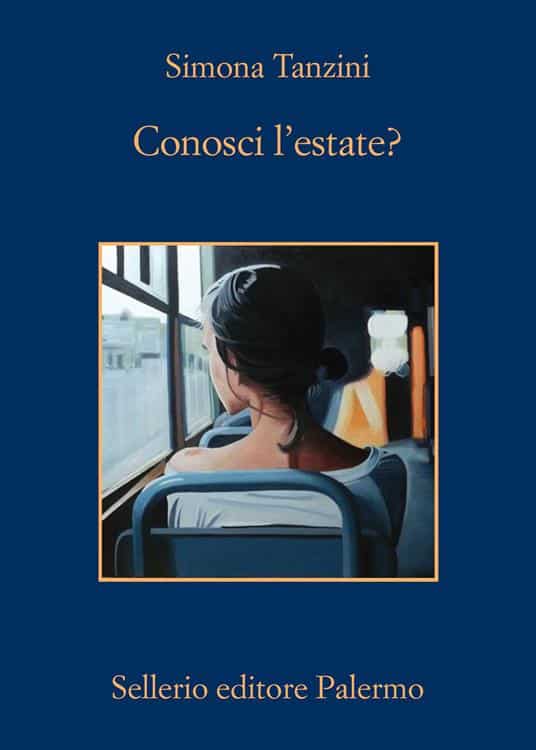
Do you know summer?
Simona Tanzini
Conosci l’estate?
Sellerio
Synopsis
Viola, a Roman transplanted to Palermo by a combination of chance and choice, is a "television personality," a TV journalist. She suffers from a perceptual disorder (she prefers "a peculiarity"), synesthesia: everything, every place, every person she looks at merges, for her, with a music, and the music with a color; but not everyone; some have no music and therefore no color; "better to stay away." This is accompanied by a more serious degenerative disease, "defective neurons," which, without disabling her, determine her way of moving and her approach to reality. Romina, a twenty-year-old from a well-off family, was strangled to death in the midst of a sirocco wind. Zefir, a very popular singer-songwriter, is immediately suspected. Viola wanders through all the places involved in the crime, leading her hectic life, snooping into the homes and daily lives of all kinds of people. Santo, the former editor-in-chief, entrenched behind stubborn silence, puts her in touch with a friend of his, a policeman she calls Zelig because of his changing color, who seems to exploit her intuitions, her visions, her ability to exploit the case. The investigation becomes an unusual first-person narrative, neither stream of consciousness nor description; a recording of distant emotions, events, and coincidences, mixed with contemporary thoughts about herself, the city, events, and people, with wit, irony, sarcasm, pity, cynicism, love—all feelings geared toward the goal of stealing the truth from a fragmented reality. " Do You Know Summer?" explores the theme of guilt and innocence, without finding the bottom. And behind the detective story, the true heart of the novel shines through: the moving portrait, almost a diary, of a woman who senses that "the darkness is widening within her," that she is "the different one," and therefore moves through life completely, with sadness and amusement, melancholy and enthusiasm, pain and enjoyment. Palermo is the symbol of these contradictions, as well as the place, an "oxymoron city": its smells, its compassion and ferocity; and the disillusioned Other Palermo, "more hypocritical and indifferent than before." But it's Viola we can't help but love.
partner




in collaboration with

with the support of