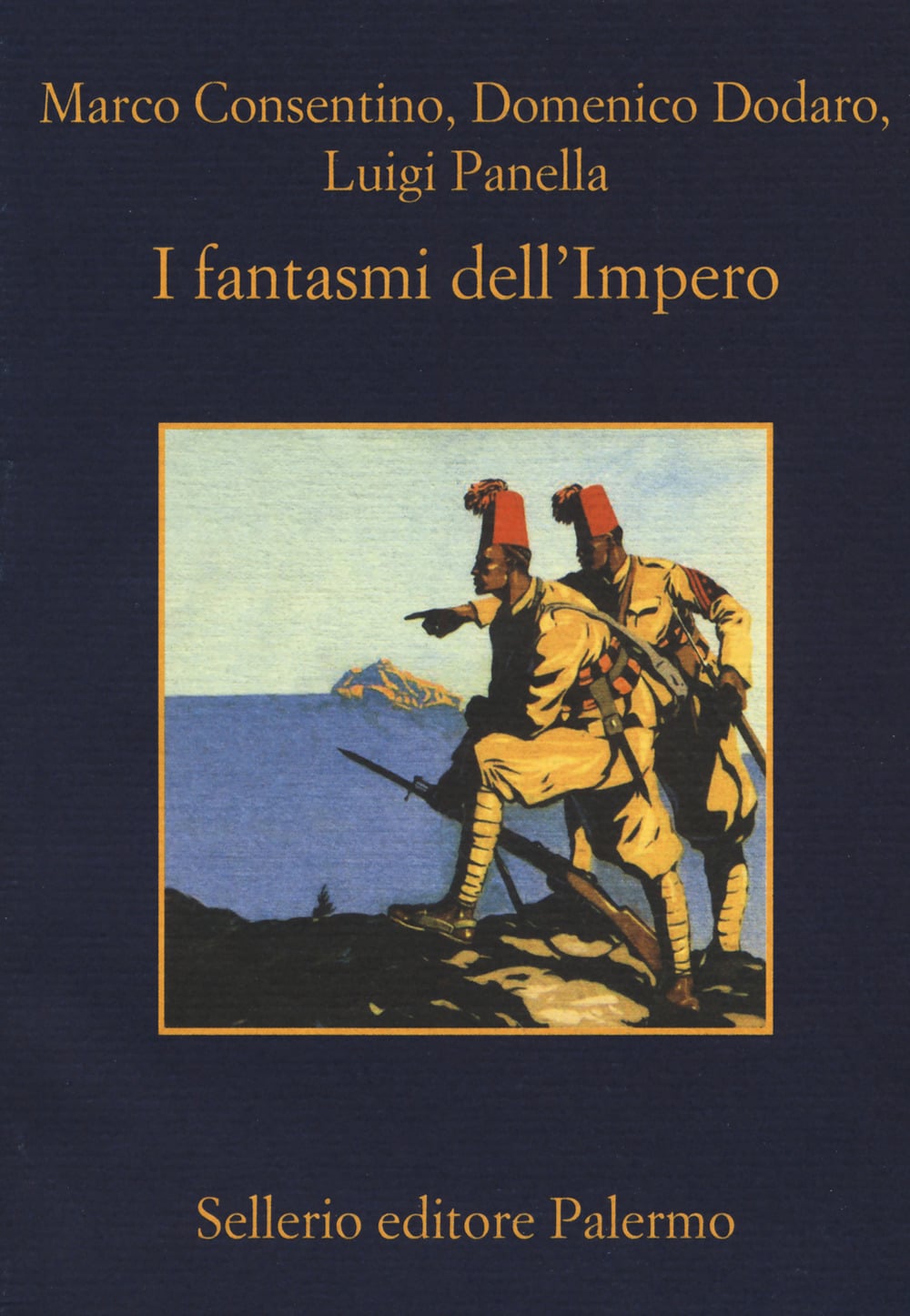
The Ghosts of the Empire
Marco Consentino - Domenico Dodaro - Luigi Panella
I fantasmi dell’impero
Sellerio
Synopsis
Ethiopia, East Africa, 1937. A year has passed since Benito Mussolini proclaimed the Empire. But propaganda remains silent about the fact that the people and the land are far from subjugated. The colonial war rages more than ever, even with the use of gas, against the arbegnoch, the patriots, and is all the more ferocious as it is incapable of success. Behind the brutality of the occupiers and the leadership of the colonial regime lies a dark plot. What makes "Ghosts of Empire" more than a historical novel is the way the plot is constructed, giving the feeling of a live report. It is a blend of fiction and history that uses every literary device available: fictional narrative combined with documents, letters and telegrams, military reports, intelligence reports, protocols and hierarchies, minutes of conversations and interrogations. A polyphony of texts that captures all the tension of contemporary life: anticipation, affection, fear, grief, rejection, horror. And at the same time, it offers—through crimes, hidden defeats, bureaucratic cowardice and sadism, but also generous gestures and noble individuals—a picture and sense of national mortification that was the unrealized construction of the "Empire." The story unfolds following the investigation of Vincenzo Bernardi. An upright military magistrate, he is there to understand the war criminal actions of an officer, a certain Corvo. There was the assassination attempt on the Viceroy of Ethiopia, Rodolfo Graziani, to which the Italians responded with a violent reprisal. In the wake of the repression, reports of excesses in distant provinces rekindled and strengthened tenacious Ethiopian resistance. Tracing the trail from village to village, searching for the culprits, Bernardi enters the heart of darkness of Italian colonialism. He knows its horrors, its vileness, the underground conflict that pitted the fascist militia against the army officers. "You were on the wrong side, Bernardi." The facts, the characters with changed names, the real names, the places, the battles, the ambushes, the executions, and the rest—everything in this novel is true; but at its core, it's fiction. A conjecture that, however, archive traces, coincidences, atmospheres, and certain post-fascist outcomes make almost plausible.
partner




in collaboration with

with the support of