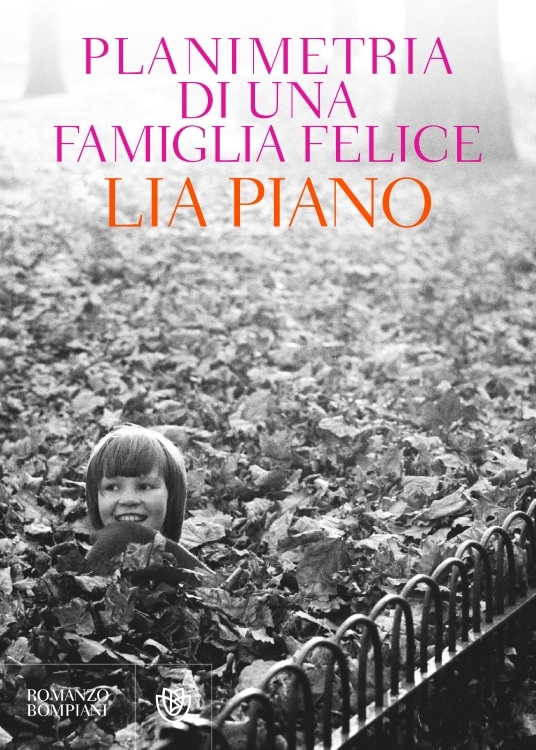
Floor plan of a happy family
Lia Piano
Planimetria di una famiglia felice
Bompiani
Synopsis
Dad can draw the world, defy gravity, and build a sailboat in the basement. Mom is beautiful, wearing high heels and even higher stacks of books around her. Maria, the nanny, speaks in a thick Calabrian dialect, can't read, and has a heart bigger than the enormous garden surrounding the house. There are three children: Marco, struggling with the first turmoil of puberty, Gioele, afflicted by an uncontrollable stutter and a dangerous passion for chemistry, and "Nana," who, from the depths of her six years, observes and tells stories. And then there's her: the villa perched on the hill above Genoa where the family has just arrived to try, perhaps, to become normal. Of course, they should disperse the crowd of animals of all kinds who believe they have a right to be present within those walls. The doors should be closed to prevent the wind from blowing relentlessly through the rooms. Avoid sleeping on the living room floor just to enjoy the full moon through the windows... Or perhaps this is the layout of a happy family? Opening this novel is like entering the large house where an enchanted childhood is possible. Then the enchantment ends, we all know it: but some people have the gift of remaining in deep contact with that first light. Lia Piano's debut novel is surprising precisely for the confidence with which she blends memory and invention, avoiding any facile nostalgia through lightness. The humor that permeates these pages is like a subtle gas, which surrounds even the difficult things and lifts them off the floor and from the heart, to let them soar into a dimension where smiling, and smiling at oneself, is salvific and magically contagious.
partner




in collaboration with

with the support of