Dasvidania
Nikolai Prestia
Dasvidania
Marsilio
Synopsis
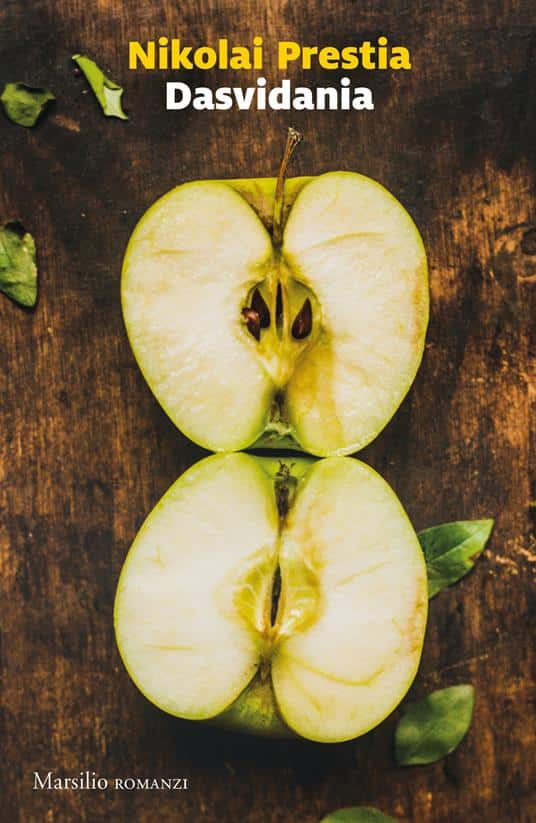
Seven-year-old Kola, intently studying a green apple on a windowsill, is staring intently at him. Outside, everything is white with freshly fallen snow. The city's rooftops are barely visible. The city overlooks a river: the Volga, in the dead of winter. Kola is an orphan and lives with his sister in an institution. He has a history of poverty, hardship, and lack of care, if not abandonment. This boy, now thirty and living in Sicily, tells his story. In this book, the institution, the long, always-empty corridors—except when the boys and girls return from school—the family of origin, the very young and helpless mother, the desperate and violent uncle, regain substance and faces. With the precision of a reportage, Nikolai Prestia recounts the second half of the 1990s and the post-Soviet era in their harshest aspects: poverty and social exclusion, domestic violence, alcoholism, and drugs. He describes those years with the ease of someone who experienced them, and with an extraordinary capacity for observation. This book, however, is not a reportage, it is a novel. It is a harsh story, one that would be unbearable if Kola's gaze didn't work a kind of magic: imagination. Except that Kola's imagination doesn't create alternative worlds, doesn't seek escape routes, but explores the symbolic, poetic, and almost magical power of everyday objects: a green apple is enough to make what was once only dark and painful nourishing, a pair of pants with pockets is enough to fly toward the future. Kola finds the strength to imagine long before words are needed to express it. And these backlit pages also tell the story of the conquest of words. First of the child who watches, now of the boy who writes. A clear, simple, welcoming language, in which ancient and literary echoes can be heard. The result is a bittersweet, at times Dickensian, atmosphere. Dasvidania tells of evil and pain, but also a great deal of good: the aunt who rescues the children from trouble, the director of the institution who first puts a book in the child's hands, and that book is The Idiot , and then the nurse Katiusha—who makes a pact of hope with him—the friends at the orphanage, each with their own burden of anger and vitality, and finally the two teachers who adopt Kola and his sister, bringing them with them to Sicily and offering them a place to root themselves from which they can look forward, and also backward. With Dasvidania, Nikolai Prestia shows how even as children we can cherish all memories, not just the happy ones.
partner
in collaboration with
with the support of