An extraordinary family
Andrea Albertini
Una famiglia straordinaria
Sellerio
Synopsis
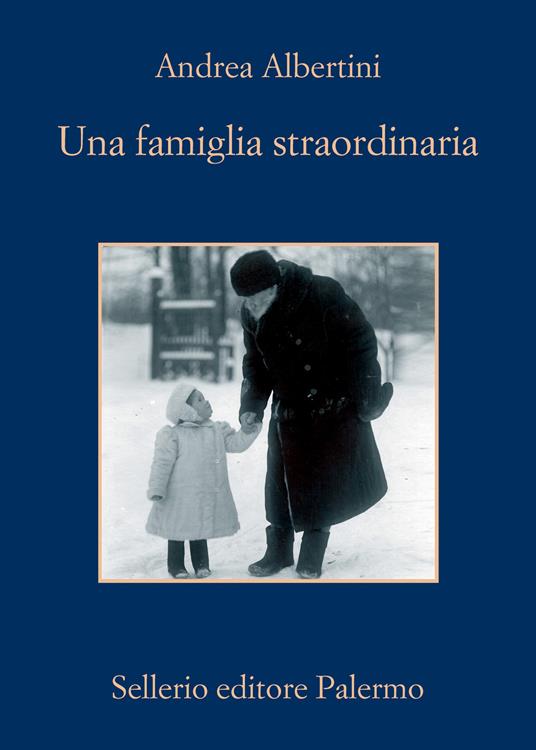
A family chronicle, at times cradled, at times stirred by the century of history (mid-nineteenth, mid-twentieth century) swirling around it; the novel of three dynasties destined to unite: the Tolstoys, the daughter and granddaughter of the Russian genius; the Giacosas, the family of the most famous Italian playwright of the time; the Albertinis, the brothers who made the "Corriere della Sera" great and dared to say no to Mussolini. The story begins in two distant places. Yasnaya Polyana, the estate where Leo Tolstoy lived; Colleretto, near Turin, where little Giuseppe, known as "Pin" Giacosa, grew up "literally immersed in the countryside." From these two corners of distant provinces, like distant ripples in water destined to join, family events and historical upheavals spring forth, leading to a single legend. The vicissitudes of the Tolstoys, of wars, revolutions, and exile; and the difficulties, disappointments, and early successes of the young Giacosa, the playwright and librettist of Tosca and La Bohème. Then the twist of chance brings about the third, most invigorating connection: the turbulent adventure of the two Albertini brothers, whose biographies are identified with the "Corriere della Sera." Especially Luigi Albertini, the editor and co-owner who made the "Corriere" the most widely read newspaper in Italy, with its revolutionary supplements, and the most modern in Europe; the liberal conservative forced to give up his newspaper to oppose, alone among his peers, the rise of fascism. He dominates this book, along with the other figure of "Pin" Giacosa, portrayed in all his human tenderness. The interiors of the houses are accompanied by extraordinary public events and great figures from the theater, journalism, and politics. The narrative point of view is the same, at each point, as the protagonists. The plot, which follows the individual stories in separate frames until they intertwine, seems ideally divided into two periods, the before and the after: the languid nineteenth century ends, followed by the catastrophes of the new century. But history does not obscure what this novel truly is: a masterful portrait of emotions.
partner



in collaboration with

with the support of